


This is the first piece in Running Estimate — a publication about how military headquarters plan, decide, and adopt technology, written by the people who’ve done the work. More on what we’re building at Onebrief.com.
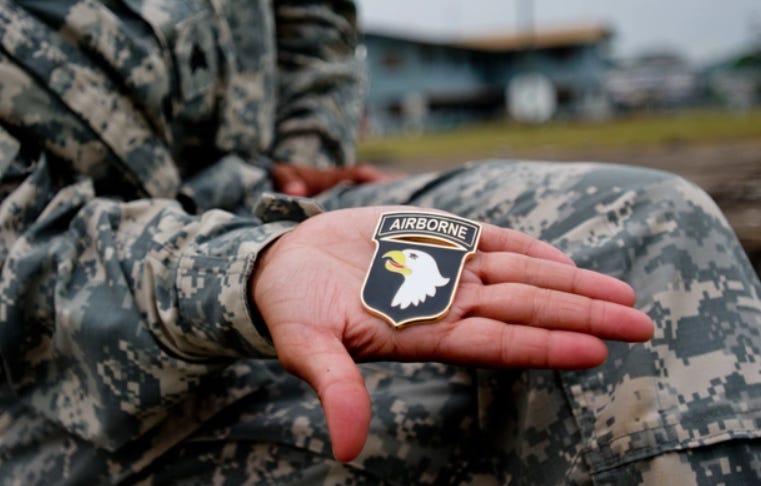
In the fall of 2014, I sat next to the logistics planner in the 101st Airborne Division’s G5 while he took a phone call from a unit deploying with us to Liberia. Days earlier, the Army tagged us to be the foundation for Joint Forces Command United Assistance, the US government’s mission to curb the spread of Ebola in Liberia.
The unit asked him a reasonable question. What do we need to bring?
He didn’t know because no one had an Ebola response plan on the shelf, he didn’t know the right people on the proper systems to ask, and frankly he didn’t have time to find out. So he told them to “bring it all”.
If this sounds like a story about a bad answer, it isn’t. And if you’ve ever been the planner holding the phone in an information starved planning environment, then you know he gave it because it was the only answer he could give.
The scarce resource wasn’t planners, but planners connected to the information.

Stop Ebola sign in Monrovia, Liberia 2014
Speed & Chaos
During a speech at the CDC in mid-September, 2014, President Obama said Ebola was, “spiraling out of control… and if the outbreak is not stopped now, we could be looking at hundreds of thousands of people infected”.
The US Army Africa commanding general and key staff arrived in Liberia the same day to initiate contracts, find space for future bases, and order supplies. Meanwhile, the 101st headquarters turned on a dime, from preparing to go on another Middle East counter-insurgency deployment to supporting an HA/DR (humanitarian assistance / disaster response) operation.
Ebola was spreading faster than any NGO or government could respond; so the military was called in. But every day spent preparing felt like a day that lives were being lost.
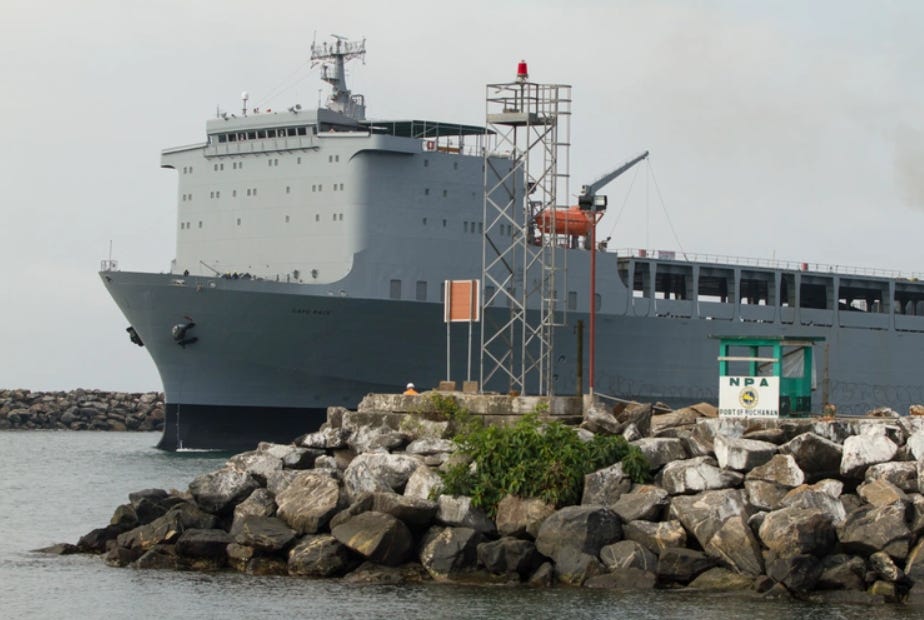
So, units brought everything. We moved equipment from Kentucky, loaded it onto two ships in Charleston and they headed East across the Atlantic Ocean to meet us in Africa.
By the time we got to Monrovia, relieved U.S. Army Africa’s advance party, and got our feet under us, we knew we’d brought a wild excess of vehicles and equipment. The second ship was halfway across the Atlantic but we couldn’t turn it around. So when it arrived, we offloaded it, kept some, but put most of it right back on the ship to sail home.
And of course, everything we put back on the ship had to be washed for port inspections even though it never left the port of Monrovia.
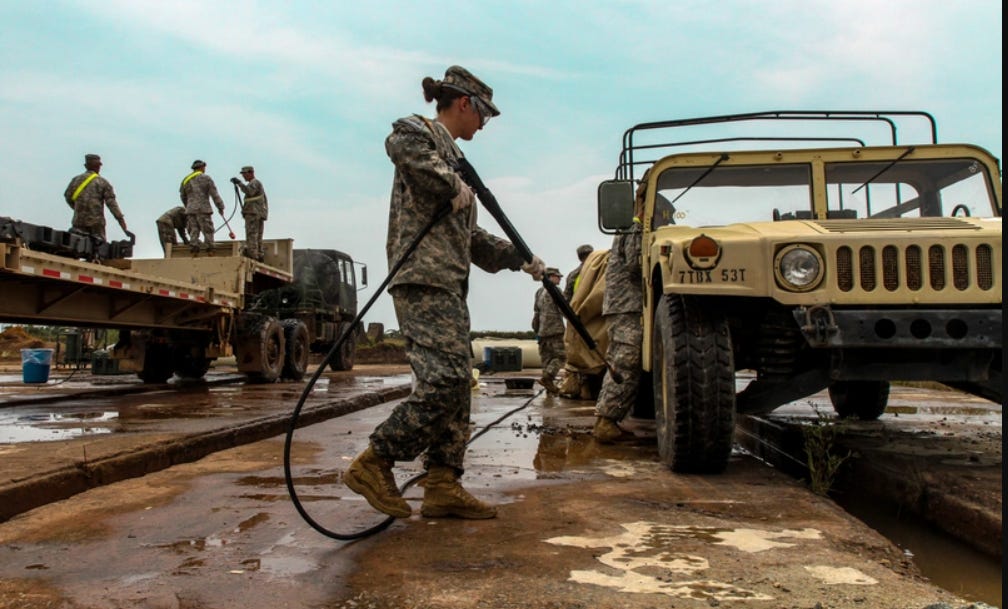
Two crossings of an ocean to deliver almost nothing.
Bringing equipment wasn’t the failure. The failure was we didn’t have enough people with the right information and no way to communicate fast enough to answer the question. So we improvised.
Planning from Scratch
No predictable patch chart. No pre-deployment staff exercises. No unit to learn from. No known re-deployment date. Only a few planners with SIPR access to receive information. It was chaos.
A decade spent replacing previous Army units in Iraq and Afghanistan taught us to plan from an inheritance. Liberia gave us nothing to inherit. And it turned out that planning from scratch was a harder problem. Not more dangerous than Iraq or Afghanistan, but harder to plan.
In Iraq, units ran pre-deployment site surveys months out, then returned home and told their units what to bring. We didn’t get the same advance opportunity, but quickly sent two liaison officers (LNOs) to US Army Africa headquarters in Vicenza, Italy, while the rest of us stayed at Ft Campbell to plan.
Our LNOs arrived two to three weeks before most of the 101st main body deployed to Liberia. They didn’t need to generate slides, only to communicate. They heard raw discussions in real time and communicated them back to us, instead of our team having to wait on official emails often delayed because of time zone differences, computer systems’ access, and competing priorities.
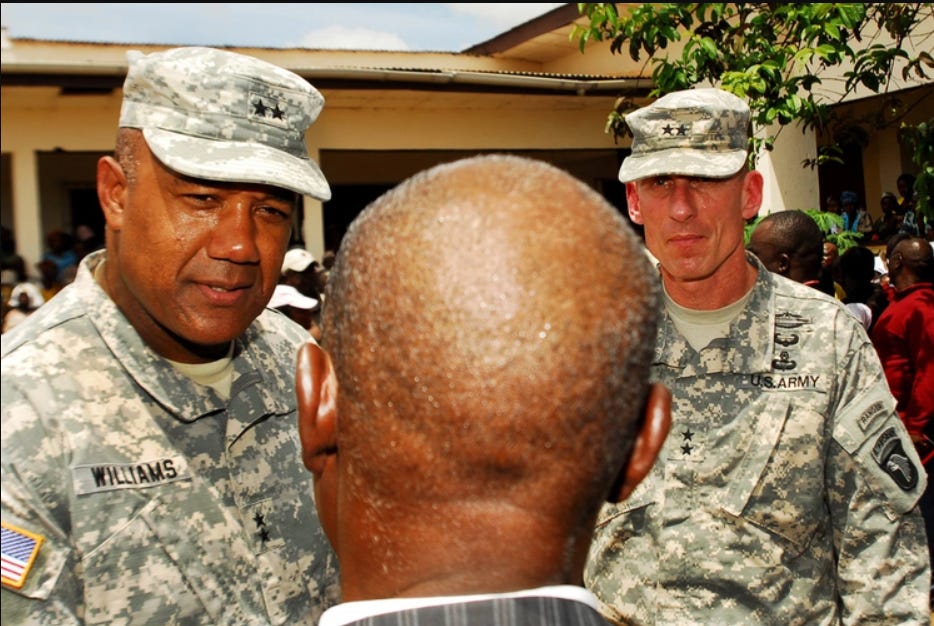
By the time we got to Liberia, many of the 100 members of US Army Africa’s advance party were on their way back to Vicenza. It wasn’t their fault, but it meant we lost a lot of the knowledge they’d gained. There was no predecessor to receive information from because there was barely a predecessor.
On top of that, our coordination architecture was built in flight. Once we got on ground and replaced US Army Africa, we were ADCON to USARAF and OPCON to AFRICOM; one headquarters manned and sustained us and a different one told us what to do. But we had no pre-existing professional relationships with these units and virtually no relief-in-place to transfer the knowledge or the networks that carry it.
Information Access
USARAF and AFRICOM’s Operations and Plans shops felt like they were staffed with 100+ experienced personnel who all lived on SIPR. We had five to ten core planners, maybe twenty to thirty more in support, fewer than ten with SIPR accounts, and no fast way to get more. In a normal deployment that gets fixed over months of pre-deployment buildup. We didn’t have months. The difference in staff size and experience felt like we were being suffocated with requests for information.
Communicating with external partners (Combatant Commands, HQDA, Joint Staff, NGOs, the government of Liberia, partner nations, allied militaries, etc) became so time consuming and integral that our leaders even assigned two members of our G5, by then a J5, to exclusively focus on receiving, routing, and answering RFIs (requests for information). Two people may not sound like a lot, but they represented around 20% of our planning capacity.
It was the right decision. And it was also the second time in one month we’d solved an information problem by throwing people at the problem.

The Army also sent us a planner from the JECC (Joint Enabling Capabilities Command). He arrived with a SIPR token and email, so he could talk with other headquarters on day one. It felt like he knew everything. He obviously didn’t, but he had access, and that was the scarcest resource in the basement of the 101st. I think our leadership might have traded half our staff for another two or three more of him.
All this made normal staff planning on PowerPoint, Excel, and Word docs shared through SharePoint wildly more challenging. A better collaboration tool would have helped, and might have solved it. But the people we needed to reach weren’t on any tool we had.
I’ll grant the obvious objection. Building products is not wasted work. Making the slide forces you to think through what you’re actually planning, and a staff that never has to render its thinking gets sloppy.
But military staffs judge themselves on how good their slides look and not on how good the plan is. I watched it for twenty years and I did it myself. In Liberia it cost us twice; once in the hours spent formatting decks that were overcome by events before they were briefed, and again because the people doing the formatting were the same few who could have been answering the question about what to bring.
Conclusion
The changes our leadership made were improvised, not designed. The fastest, most reliable way for our headquarters to understand the situation was to physically relocate people to where the conversation was happening. We had the people but not the connections.
Our logistics planner didn’t know his counterparts at AFRICOM and had no way to reach them in the time required. So we brought it all.
The next time your staff gets a mission with no unit to replace, someone will call and ask what to bring. Whether that planner can give them a real answer depends on how your headquarters allocates its people and how fast its information actually moves. You can know today which of your planners can reach outside the building. You can fix that number before you need it.
Alex Willard is a retired Army Lieutenant Colonel. He spent twenty years as an infantry officer, strategist, and marketing officer, with deployments to Iraq, Afghanistan, and Liberia. He holds a Master’s in Behavioral and Decision Sciences from the University of Pennsylvania and works at Onebrief.
Running Estimate is published by Onebrief. Authors’ views are their own.
